Contrast therapy in London
Contrast therapy is the practice of deliberately alternating between hot and cold — usually sauna and cold plunge, or sometimes hot showers and ice baths. It’s been done for centuries in Northern Europe, Russia, Japan, and Korea. The last decade has seen it land properly in London.
We built Sauna & Plunge Co. as a dedicated home for it.
What contrast therapy actually does
When you sit in a sauna, your blood vessels dilate and your heart rate rises. Step into a cold plunge and the opposite happens — sharp constriction, a flood of adrenaline, your system goes into a state of high alert. Move back to the heat and it all reverses again.
This back-and-forth is the point. It trains the cardiovascular system, improves circulation, and is associated with a range of well-studied benefits: faster muscle recovery after exercise, lower perceived stress, improved sleep quality, and a noticeable lift in mood and alertness. The cardiovascular evidence in particular is strong — the long-running Finnish KIHD study, which followed over 2,000 men for two decades, found regular sauna use was linked to significantly lower rates of cardiovascular disease. Cold exposure has its own well-documented effects on circulation, inflammation, and the release of dopamine and noradrenaline (which is why people often describe a sharp post-plunge mood lift).
What the research is clear on: this isn’t magic, and it isn’t a substitute for sleep, training, or eating well. But used regularly alongside the basics, it’s one of the more genuinely useful recovery practices available.
The mental effect is harder to put into words but easier to feel. People describe it as a reset — a clear head, a settled mood, something like the feeling after a long walk or a good night’s sleep, compressed into 30 minutes.
How we do it in the space
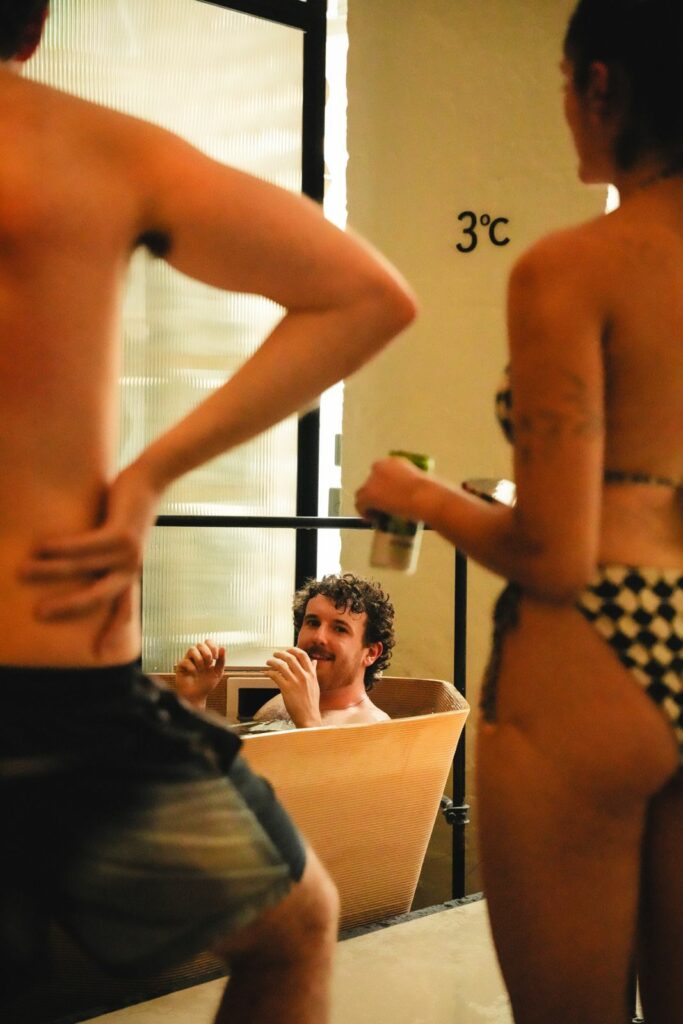
Our space is built for contrast therapy specifically. Two saunas — a traditional Finnish sauna at around 85°C with proper löyly, and an infrared sauna at around 60°C for a gentler, deeper-penetrating heat. Three plunges — 3°C, 6°C, and 12°C, the warmer one based on emerging research around women’s cold-exposure response and useful as an entry point for first-timers too.
A session is 30 minutes, deliberately. Inside that time, a typical contrast cycle looks like this:
- Sauna — 8 to 10 minutes in either the Finnish or the infrared
- Cold plunge — 1 to 2 minutes in whichever plunge suits the day
- Rest — a few minutes. Hydrate. Breathe.
- Repeat — three or four rounds in total
You can do this on your own, with friends, or join one of our guided sessions if you want a bit more structure first time round.
Why 30 minutes
Most contrast therapy guides will tell you to set aside an hour and a half. We disagree. The benefit of this practice isn’t from doing it occasionally for a long time — it’s from doing it regularly for a manageable amount of time. Thirty minutes fits into a lunch break, a gap between meetings, or the bit of the morning before everything else starts. That’s deliberate. Because consistency is where the magic really happens. Three short sessions a week beats one long one every time.
Why London needed this
For all London’s strengths, recovery has been a gap. Plenty of gyms, plenty of fitness, plenty of yoga — much less serious infrastructure for what happens after the training. Contrast therapy is part of how Nordic countries close that loop, and we wanted to bring a proper version of it to East London.
What we offer
- Drop-in contrast therapy sessions
- Guided introductions for first-timers
- Memberships and the Summer Pass
- Group bookings and sharer packages
- Run clubs and collab events
Common questions
Is it safe? For most people, yes. If you have a heart condition, are pregnant, or have any condition affecting circulation or blood pressure, check with your GP first.
How long until I feel a benefit? Most people feel something — usually mental clarity and a mood lift — after the first session. Physical benefits like better sleep and improved recovery tend to show up over a few weeks of regular use.
How often should I come? Two to three times a week is the sweet spot for most people. Some come daily. Some come once a week. There’s no wrong answer — but the 30-minute session length is designed to make it a regular thing rather than an occasional thing. That’s where the real benefit is.
Blog
SAUNA&PLUNGE